
When someone you love dies, they're not gone.
About the old headshot that revealed new things.

I love photos of the wrinkles and the hard-earned grey hairs that mark a long life well-spent. But there’s something magical about old photos. They’re actual time machines, giving us the ability to go to the past and see someone else’s future. We can look at a person and know what their impact on us will turn out to be in ten or twenty or 75 years. Even if that person staring straight back at us doesn’t know it themselves yet.
While poring through dusty albums — a requirement for the family of the recently deceased— I found a glossy 8x10 of my dad in his late 30s.
I gasped.
I have a lot of old photos of him, but there was something about this one that was so bright and full of life, especially for a business headshot. It was bursting out of the paper.
So when we celebrated my dad’s life in a tiny, family-only memorial in my living room a few weeks ago, I propped it up on a nearby table.
It made everyone gasp too.
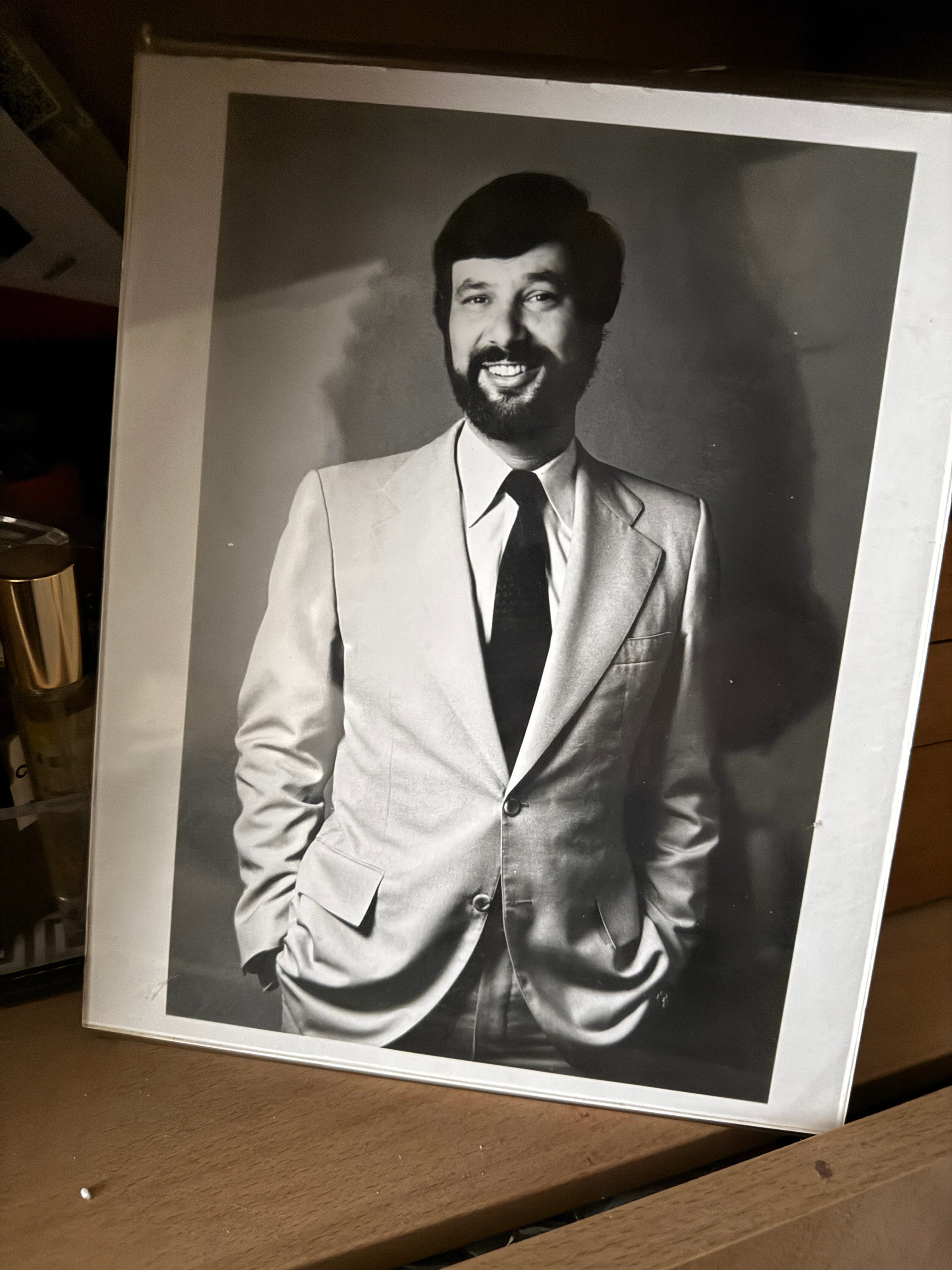
Our kids didn’t recognize him like this; they hardly remember him before the accident that put him in a wheelchair. But I realized that this youthful, charming man with a smile that couldn’t be contained and a little mischief in his eyes is the dad that I still saw when I looked at him.
Spending time with this photo, and the older memories it evoked, helped me see new parts of myself in him too —
Beyond his love of telling the same stories over and over.
Beyond his insistence at sending back the steak if it were overcooked.
Beyond his ability to tear up reading every hand-written card on his birthday.
He was a born mentor and connector. And when this portrait was taken, he was close to embarking on a whole new career that would let him live out that calling.
Since my dad died, people have shared memories about the “renaissance man” who loved art and film and photography, gardening and travel and cooking, his appetite for joy, his love of Amye, and his great storytelling. Anyone who met him for even a moment would know these things about him. But what’s been most special to me is learning that, above all else, he will be remembered by so many people as the person who changed their lives in some way.
It’s cool to feel proud of your parents. Highly recommend.
When my dad switched from ad agency account director to starting his own boutique executive recruiter business, everyone who knew him told him it was perfect for him.
Today, most people think of recruiters as dubious hustlers trolling LinkedIn for their resume collection and he was horrified by what had become of the profession. If you’ve ever submitted 100 resumes without hearing back from any of them, or scored six terrific interviews up the ladder at a dream job — only to be weirdly ghosted— you know what it feels like to job hunt without a great recruiter to support you.
Paul Gumbinner would have supported you too.
My dad wasn’t famous, but it’s safe to say he was a name behind the names on the corner offices. Like all the people in the Oscars In Memorium tribute, unknown to most of us at home, but whose memories evoke tears inside the theater.
He didn’t have a job fighting fires, writing grants, performing open-heart surgery, reforming politics or writing the songs that help us make sense of the world — but he quietly changed lives he cared deeply about.
I’ve been so honored over the past few months that so many people have shared stories about their relationship with him. My favorites are those explaining that while he never even made a penny off their job moves, he always took their calls, gave advice, or set up a lunch if they needed a longer conversation.
I knew he loved his work. I knew he worked hard. I knew he stepped away from family dinners and summer vacation time to take a call.
I hadn’t considered that he was taking a call from someone he knew who needed his help.
I hadn’t considered that he woke up every day feeling his life’s work had purpose.
We should all be so lucky.
And here I must add, that he never ignored a call from his kids either. Ever. No matter where he was in the world, he picked up the phone if only to say, “Everything okay? Can I call you back soon?”
When my brother and I were young, he often advised us, “Whatever you want to grow up to do, you can do. Just be sure you do it well.”’
“What if we want to be circus clowns?” We’d joke.
“Do it well.”
“What if we want to be door-to-door bible salesmen?”
“Do it well.”
“What if we want to be bank robbers?”
“Do it well,” he’d say with a smile. “And don’t get caught.”
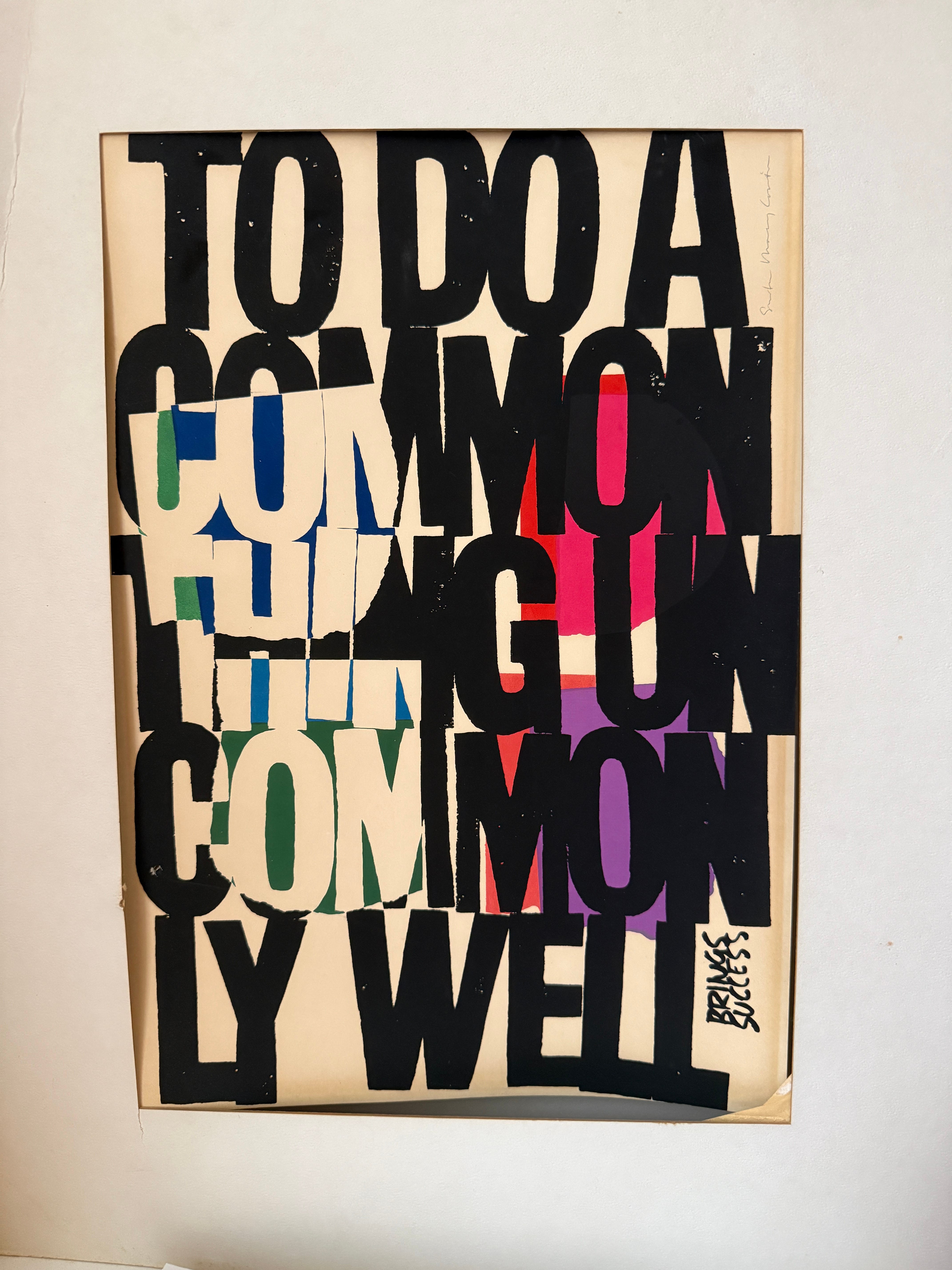
The Sister Mary Corita Kent print that used to hang in his office. I love waking up to this thought. And yes, it needs some TLC and someone who can frame it uncommonly well.
As I started writing this yesterday, my friend Nina, who is grappling with similar feelings, mentioned an Anderson Cooper quote about grief. From his appearance on Stephen Colbert:
The incredible thing is, the good news is, you can still have a relationship with somebody who’s died.
It turns out that his legacy era marks a new era for me too. Grief is a terrible thing, but it comes and goes. I’m finding that the mourning is increasingly being replaced by a deeper understanding of who my dad was, who he was to me, and who we were to each other.
I’m learning the things about him that are in my DNA, inextricable from who I am and the things I care about.
I’m seeing the parts of him I’ve carried on as a parent. And a partner. And a writer. And a mentor. And the teacher who will answer a panicked 11 PM email from a student because I can tell they need it. And the person whose inclination is to smile big in headshots.
(The world has enough brooding creative director types.)
Also, I will always take a call from my kids. Always.
When people ask me how I was able to get back to teaching so quickly after he died, I think it’s in part because he would have wanted me to. In part it’s what he would have done himself.
But maybe even more than that, it’s because he doesn’t really feel gone.
Although damn, if I wasn’t devastated that I couldn’t cheer over the phone with him about the Knicks win last week.
(Like me, my dad wasn’t the biggest sports fan, but he was absolutely the biggest fan of NYC. Besides maybe Fran Liebowitz. And, New Yorker that he was, he’d happily have ceded that accolade to her.)
I know he’s not here here. I know that Father’s Day going to be a bitch this weekend. But I also know that not being here isn’t the same as being gone.
He will never be gone.
Because he’s part of me.
This may be one of the most beautiful and heartwarming tributes to a man who embodied all of the extraordinary qualities you so eloquently stated. You are so very much like him in almost every way.
He was always so proud of you and was in a better place after he got off the phone with you. Which was pretty much every day.
I love having this and your other posts. It is sad for me, but they bring me so much joy.
Your assessment of looking at old photos of people (particularly those you know or knew so well and for so long) is brilliant.
Thank you for sharing yourself.
I love you so much.
I wrote about my dad today, the first time I’ve done that publicly. He died when I was 15. He got his clock when he got his cancer diagnosis. https://charlottedungan.substack.com/p/the-importance-of-the-virtuous-company